Research
-
Joseph DeSimone: New high-speed microscale 3D printing technique
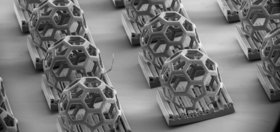
A new process for microscale 3D printing creates particles of nearly any shape for applications in medicine, manufacturing, research and more
March 15, 2024
-
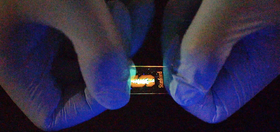
Zhenan Bao: Smaller, more powerful stretchable electronics for wearables and implantables
Stanford researchers have developed soft integrated circuits that are powerful enough to drive a micro-LED screen and small enough to read thousands of sensors
March 14, 2024
-
October 05, 2023
-
September 27, 2023
-
Monther Abu-Remaileh: Driver of neurodegenerative diseases revealed
In searching for how a gene mutation associated with the cell’s recycling center leads to a rare disease, the team identified a missing link in neurodegenerative conditions.
September 21, 2023
-
Chaitan Khosla: The future of antibiotic synthesis
A chemical engineer explains why microbes make the best drug factories in the world — and why science is still playing catch-up.
July 13, 2023
-
Matteo Cargnello: The future of greenhouse gases
A chemical engineer explains why he thinks a better approach to greenhouse gases in the sky is to turn them into other chemicals.
June 01, 2023
-
Zhenan Bao: Soft ‘e-skin’ generates nerve-like impulses that talk to the brain
A single, multilayer, soft, and stretchable material with integrated nerve-like electronics can sense pressure, temperature, strain, and more, just like real skin.
May 18, 2023
-
Zhenan Bao: The Science of Skin
Chemical engineer Zhenan Bao strives to re-create nature’s ultimate electronic system.
February 28, 2023
-
Hydrogen Innovators Podcast
Professor Jaramillo gives an overview of the different clean hydrogen production pathways and use cases and explains the growing role of hydrogen in a decarbonized world.
January 27, 2023
-
Zhenan Bao: Flameproofing lithium-ion batteries with salt
A polymer-based electrolyte makes for batteries that keep working – and don’t catch fire – when heated to over 140 degrees F.
December 07, 2022
-
Andrew Spakowitz: Microscopy and simulation unite to improve new-age polymers
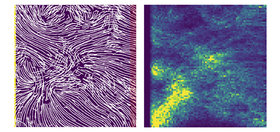
Stanford researchers explore a novel avenue of material design using advanced computer simulations to virtually modify the real-world inner structures of promising new polymers.
November 11, 2022
-
Xiaojing Gao: Engineers develop new tool for targeted protein production
A new method for prompting cells to create specific proteins can more accurately focus on which cells make the proteins and when.
October 05, 2022
-
Joseph DeSimone: A new 3D printing method promises faster, multi-material creations
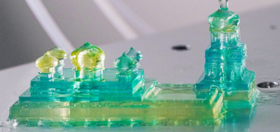
Engineers have designed a method of 3D printing that is 5 to 10 times faster than the quickest high-resolution printer currently available
September 28, 2022
-
Monther Abu-Remaileh: Sifting through cellular recycling centers
A new method that allows scientists to determine all the molecules present in the lysosomes of mice. This could bring new understanding of neurodegenerative disorders.
September 22, 2022
-
Zhenan Bao: An autonomous wearable device measures a tumor’s changing size
An electronically sensitive, skin-like membrane can measure tumor size regression and offers a new way to test the efficacy of cancer drugs.
September 16, 2022
-
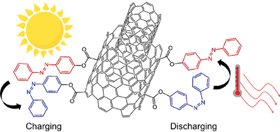
Embedding Azobenzene-Functionalized Carbon Nanotubes into a Polymer Matrix for Stretchable, Composite Solar Thermal Devices
Research by Thomas W. Colburn, Alea C. Delmastro, Michael Figueroa, Francisco Lopez and Christopher B. Cooper
September 08, 2022
-
Zhenan Bao: A fitness tracker for the brain
A new string-like implant can monitor fluctuations in brain chemicals central to Parkinson’s, depression, and gut disease.
June 03, 2022
-
Roseanna Zia: The physics of gel-like substances
Most things aren’t liquid, solid, or gas. They’re gel-like — and understanding how they work can improve our understanding of biology and human health.
May 05, 2022
-
Zhenan Bao: A stretchable display could transform how we interact with electronics
A team of researchers have developed a high-brightness, stretchy color displays that allow a new way of interactive human-machine interface.
March 23, 2022